
The Do Better Business™ Framework for Building Sustainable, Impact-Focused Companies
The Do Better Business™ Framework
For Building Sustainable, Impact-Focused Companies
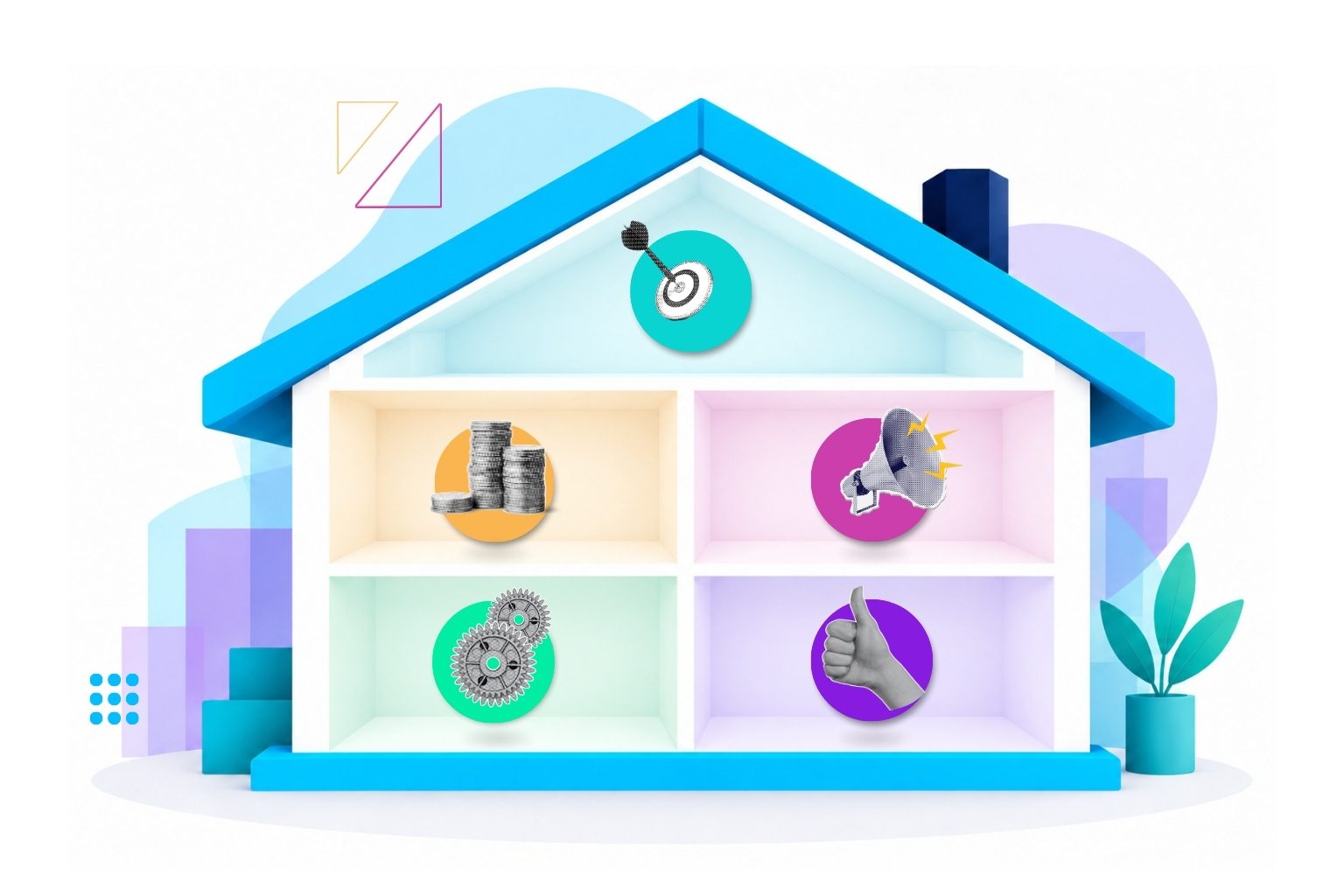
Growing a business doesn’t have to mean guesswork, burnout, and missing out on life. The Do Better Business™ Framework is a clear, proven structure for building a business that supports the life its leaders actually want to live.
Running a business right now means constant uncertainty: shifting markets, rising costs, unpredictable everything. The old model of nonstop, upward growth asks leaders to sacrifice their own well-being and their team’s to keep pace at any cost.
Renia Carsillo founded Realign Consulting and designed the Do Better Business™ framework after years of watching business leaders carrying shame for not understanding the “mechanics” of the very companies they’d worked so hard to build. And, she has seen them pay too high a cost to their health, their relationships, and their connection to why they started the business in the first place. She knew there had to be a better way.


The Do Better Business™ Framework Is Built on the Belief That Companies Can Thrive, and So Can Their Leaders.
Business leaders shouldn’t have to run themselves into the ground to build something that lasts. Business strategy isn’t actually as complicated as the consultant class would like everyone to believe.
That conviction sits at the center of the Do Better Business™ framework: five core pillars, built on sustainable habits, forming a people-first, values-driven roadmap to growth.
For 20 years, Renia has watched the right business model do more than save a founder or a team. She’s watched it reshape entire communities. The Do Better Business™ framework is how that happens: real change, one sustainably built company at a time.
“You did then what you knew how to do, and when you knew better, you did better.”
— Maya Angelou, as reported by Oprah Winfrey

The Philosophy & Origin of Do Better Business™
The strategies in the Do Better Business™ framework are based on almost two decades of helping founders build sustainable, impact-focused companies. But the name and guiding philosophy come from this quote.
Guilt and shame are not as conducive to growth as curiosity and self-compassion are. Dr. Angelou’s words remind leaders that growth isn’t about punishing themselves for what they didn’t know. It’s about doing their best with what they have and staying open to what they learn next.
The Do Better Business™ framework works the same way: It exists to hand leaders clarity about their businesses so “doing better” becomes something they can actually act on, not just something they feel guilty about not already doing. That clarity starts with five core pillars.
The 5 Pillars of Do Better Business™
Every company, no matter its size or stage, depends on the same five core areas:
Sales & Marketing
How people find the business and become customers.
Distribution
How the service sold or the product made actually gets delivered.
Operations
The non-revenue-generating parts of the company (think HR, technology, maintenance, and more).
Finances
The money side of things (pricing models, revenue plans, tax management, and more).
Leadership
How leaders lead themselves, their team, their industry, and the communities they serve.
(Wait, where are Vision and Mission? We’ll get there.)
When these five pillars are aligned (and supported by consistent habits), growth stops feeling like guesswork and starts feeling like a plan businesses can actually follow.
And for leadership teams, this framework doubles as a guide. It makes it easy to see exactly who is holding which piece, so nothing important falls through the cracks.
That’s why we picture this framework as a house, not a map. A map implies one path forward, but a house shows how each piece is interconnected (and everyone already knows what happens if you skip the foundation or try to build the walls out of order).
See how the 5 pillars work


Click a pillar to see how it powers your business
Tap a pillar to see how it powers your business
Sales & Marketing
How people find the business and become customers.
Marketing & Sales:
The Heartbeat That Sets the Pace for Growth
The Marketing and Sales pillar sits at the center of the framework because it’s the heartbeat of the business. Think of it like the load-bearing wall the rest of the structure leans on. A healthy heartbeat keeps a strong, steady rhythm, saving short bursts of intensity for when they actually serve a purpose, not relying on them to survive.
In practice, we’ve seen this pillar become a sort of litmus test:
How a company approaches its marketing and sales is usually a clear signal of how it approaches everything else.
- A business stuck in constant "sell, sell, sell" mode, with little attention to whether it's actually working, tends to carry that same lack of awareness into other parts of the business.
- A business that treats marketing as an afterthought is usually just as unintentional elsewhere.
- And a business that only turns to marketing when revenue dips is often stuck moving from fire to fire everywhere else, too.
In contrast, an aligned Marketing and Sales pillar addresses each of these patterns directly. Instead of selling on autopilot, a business learns to pay attention to what’s actually working and adjust as it goes. Instead of marketing being an afterthought, it learns to give marketing the same intentionality as everything else in the business by:
- offering people what they actually want,
- priced in a way that supports the business,
- with a sales approach that feels like service rather than pressure.
Instead of turning to marketing only when revenue dips, companies can create a steady, ongoing practice, not something they only reach for when growth gets hard.
The Marketing and Sales pillar leads because it sets the pace for the whole business.
In our Strategic Planning Retreats, we often tell clients that sales can cure everything — the operative word being can. Sales alone won’t solve every problem, and sales without attention to margins and cash flow can create new ones. But healthy, steady sales generate the cash that makes almost everything else possible: paying the team well, offering benefits, investing back into the community, and giving leaders room to breathe.
That’s the kind of rhythm the Marketing and Sales pillar is built to create. Not adrenaline, but a cadence the rest of the business can actually move to.
Distribution:
Transforming Sales Into Profit
Distribution is about what happens after the sale. It’s about delivery strategy: production modeling, project management systems, client management, and everything else that turns a sale into finished, delivered work.
If a customer bought electrical work, this is the fleet and team management that gets the job done. If they bought a product, this is the manufacturing, packaging, and shipping that gets it into their hands. If they bought a ticket, this is the event itself.
We spend more time here with Strategic Planning clients than almost anywhere else, because this is where margins are made.
It’s the pivot point between a company that’s simply selling and one that’s actually profitable.
Left unaddressed, this pillar often means untracked delivery costs, quietly disappearing margins, and delivery that only works because one person is doing it all. Aligned, it’s a documented process that protects profit and lets the work get done without any one person having to oversee every step.
Operations:
Building the Infrastructure That Powers the Team

Operations includes everything that keeps the company running behind the scenes. These are the parts that don’t necessarily generate revenue directly, and sometimes represent a real cost or investment before they pay off. Think training programs, HR policies, and the internal systems that make sure the team knows how to do its job well, without leadership having to explain it every time.
Operations isn’t customer-facing. Its effect on customers is indirect, felt through the Distribution pillar: Is the business staffed well enough to keep up? Does it have the right tech stack to support the work?
What is addressed in Operations decides how much capacity Distribution actually has to work with.
Left unaddressed, this pillar often looks like undertrained teams, undocumented policies, and a tech stack that can’t keep pace, all of which limit how much a business can actually deliver. Aligned, it’s the training, staffing, and systems that set the team up to do good work, and give Distribution the capacity to deliver on what’s already been sold.
Finances:
Turning Numbers into Confident Decisions

The Finances pillar is where founders and executives tend to feel the most anxiety. First, it’s important to understand that it’s about more than revenue, or even profitability. It’s also about the financial efficiency and sustainability of the business, both in the short term and the long term.
This pillar involves a working understanding of the numbers (what to charge, how to manage cash flow, and which metrics actually matter), so that decisions come from clarity rather than anxiety.
Left unaddressed, this pillar often shows up as feast-or-famine cash flow and pricing based on guesswork.
Aligned, it’s confident, value-based pricing, a clear read on the few metrics that help direct focus, and enough of a cushion to weather the unexpected (a slow season, a lost client, a shift in the market) without it turning into a crisis.
Leadership:
Grow the Leadership Every Business and Community Needs
The Leadership Pillar is about how founders and their teams show up as leaders, not just inside the company, but in their industry and community as well.
This pillar is forward-looking: It’s as much about the leadership methodology of the organization as it is about what each individual leader is becoming.
Left undeveloped, this pillar often keeps CEOs, Founders, and other executives as the sole decision-makers long after the business has outgrown that model. Aligned, it’s leadership (from the founder and their team) that extends inside the company and beyond. That shift often comes down to habits, which is exactly where we turn next.
Where a business starts within these five pillars is never one-size-fits-all. It depends on the individual company, how aligned the team already is around values and mission, and what the numbers are actually showing.
The Foundational Habits That Support Sustainable Growth
None of the five pillars holds weight without consistent habits supporting them. Habits matter so much to this framework that we talk about them first during Strategic Planning Retreats. We address habits even before we dive into the business model, pillars, or anything else.
Much of what we talk about regarding habits comes down to what behavioral researchers call keystone habits: small, consistent habits that create a ripple effect across everything else you do. Change one keystone habit, and it tends to pull other positive changes along with it, almost without effort.

To create a sustainable business strategy, we start with the foundation, not the walls, because a business built on top of inconsistent habits will struggle no matter how sound the strategy is.

Personal Keystone Habits
We believe the leadership of a business has to take care of itself before it can take care of a team or implement any strategy well. Leaders must be grounded, connected, and values-aligned to lead with clarity. And, this is a constant practice, not a one-time state of being.
The practice looks different for everyone, but there are five critical keystones that we recommend all leaders try on, personally, even before addressing their professional or organizational habits.
- Write daily.
- Meditate for at least 10 minutes.
- Make the bed.
- Move your body for at least 20 minutes.
- Get enough water.
These habits aren’t meant to be adopted all at once, and we typically have clients commit to just two of them to start. The goal isn’t to overhaul everything overnight. It’s to let the impact of a couple of small, consistent habits compound over time.

Business Keystone Habits
Alongside personal habits, every business benefits from its own set of keystone habits. These keep the company oriented toward what matters instead of reacting to whatever’s loudest that day:
- Track daily and weekly sales.
- Earn at least 100 points per week on the VIP Scorecard
- Prep for tomorrow at the end of each day.
Like the personal habits above, these compound over time. And, they’re the practical, everyday layer that makes it possible to build and sustain everything else in the Do Better Business™ framework.
Our Unconventional Approach to Vision & Mission
The five pillars don’t exist for their own sake. They exist to support where a business is actually trying to go. For many of our clients, that means something bigger than the company itself: a business that treats its people well, serves its community, and contributes, even in a small way, to a kinder, more equitable world.
Most business methodology has you start here. After two decades of working with businesses of all sizes, Renia has learned that a company’s vision and mission are an ongoing discovery, not a starting point:

“A lot of business methodology has you start with these, but I’ve found they often develop as a business matures. And what you start with often has little correlation to what the company actually is or becomes. Trying to stick that landing before you’ve operationalized a business can create unnecessary spend, anxiety, and frustration.”
— Renia Carsillo, Founder Realign Your Strategy

That doesn’t make a company’s vision and mission optional. They just don’t need to be nailed down right out of the gate. Like any good home, if you don’t have a roof, it’s going to be an uncomfortable place to live when the weather turns.
Once they’re in place, vision and mission do real work: they keep a business going when times are tough, help leaders make good decisions as the company matures, and help figure out next steps whenever there’s a need for strategy realignment.
Do Better Business™ Supports the Cyclical Nature of Growth
Knowing better isn’t free. Getting there means being willing to look honestly at what isn’t working, be open to learning new information, and change habits or systems that feel comfortable, mostly because they’re familiar.
And the Do Better Business™ framework isn’t something to set once and forget. Sustainable growth isn’t a straight upward-moving line, but rather a consistent cycle of realignment that keeps a business moving forward as it evolves. This understanding inspired our company name: Realign Consulting.
This idea of cyclical growth stands in direct opposition to the idea that growth should only move in one direction, up and fast, forever. That kind of relentless upward pressure takes a real toll on business owners’ mental and emotional health, their teams and communities, and the environment around them.
Realign Consulting exists to offer a different way to do business, with growth that moves in a sustainable cycle, not a straight line with no end. The Do Better Business™ framework is how we forge that new path, pillar by pillar, cycle by cycle.

That cycle, what we call the Stages of Business Development, has four parts:
- Gain Perspective. Step back and take in new insight before the next move.
- Reflect & Assess. Check in on what's actually happening against the plan.
- Celebrate & Repair. Mark real progress — don’t forget to celebrate! — and repair what needs repairing along the way.
- Recommit to Action. Renew commitment to the plan, adjusted for what’s been learned.