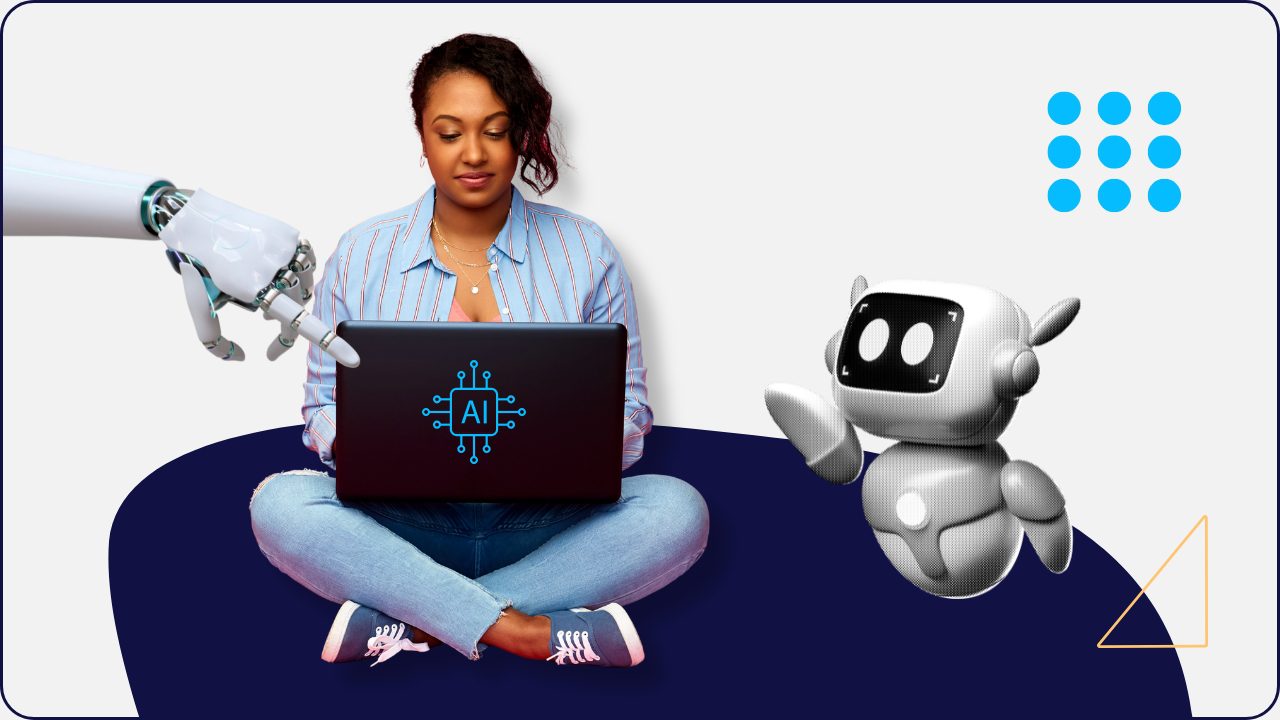

We believe in the creative possibilities of humans using AI to build new things, in a boundaried way, with eyes open to the risks.
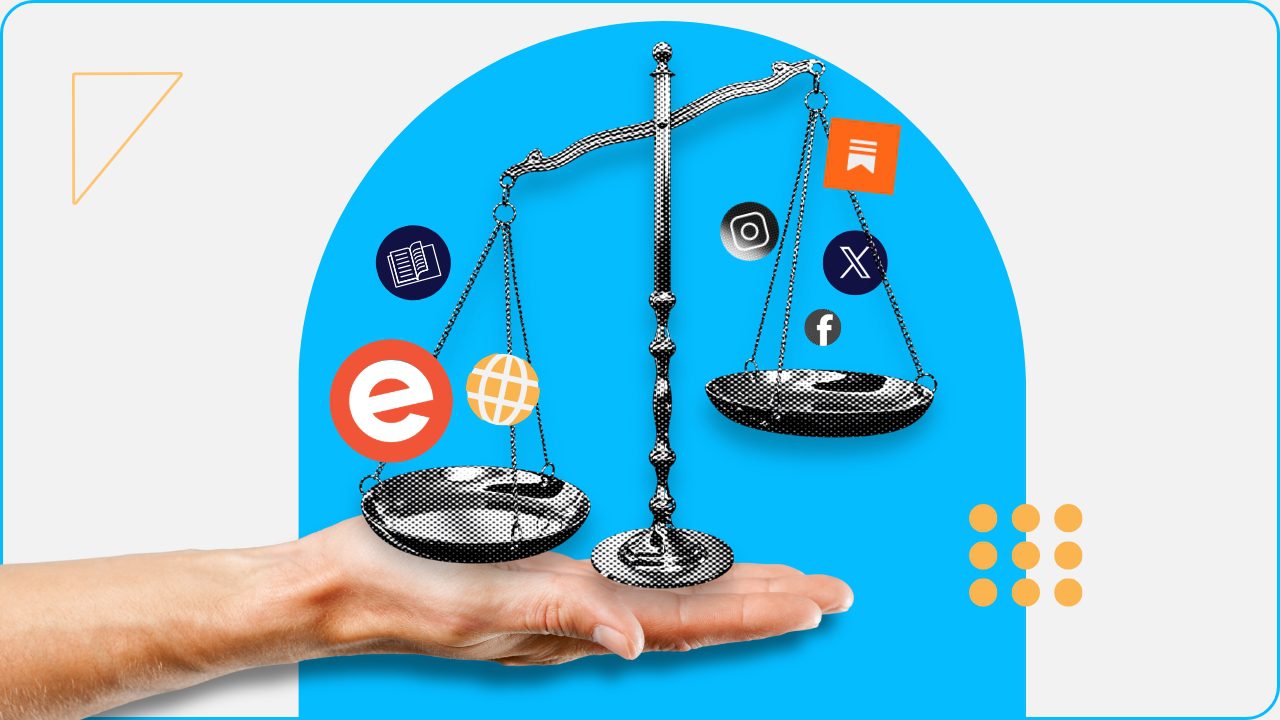
AI can be two things at once. And right now, it certainly is.
The recent developments in AI capabilities are both exciting and disappointing, helpful and frustrating, promising and concerning.
In short: It’s complicated. As a team, we’ve spent time weighing how we use AI in our work as an impact-focused company.
Values and Boundaries Before Tools (Friction-free isn’t the goal. Alignment is.)
Before we pick a tool, we identify our boundaries. When we know our Red Lines and our Exploration Zones, we stay in the driver’s seat.
Red Lines
Boundaries we won't cross, no matter how convenient it gets.
- We don’t start with AI to frame questions, creative direction, or strategy.
- We don't publish AI-generated images or video.
- We don't let AI have the final word on anything we publish.
- We don't use AI-generated stories or client narratives (more on this below).
- We don’t let AI make critical decisions related to the who, how, and what of our service to our community.
Exploration Zones
Where AI genuinely makes our human work better.
- Providing wording options when we’re stuck.
- Checking our work against the brief.
- Streamlining internal SOPs and reports.
- Research jumping-off points and data analysis.
Why We Don’t Use AI-Generated Stories
It would be faster to let AI invent case studies and client wins. We don’t do it. We tell real stories about real clients, because stories aren’t just a content format to optimize—they are how humans connect with each other.
Audiences can feel AI-generated stories from a mile away. And even when they can’t, something’s lost: The whole point of a story is connection, and a machine can’t have had the experience it’s describing.
How We Move, Once We Know Where the Lines Are.
Red Lines and Exploration Zones tell us what’s in bounds. This three-step process tells us how we move once we’re there:
People First
Before anything else, we ask how this affects our team, our clients, our community, and us. AI doesn't get a say until people do.
Systems Second
We build the structures that protect our time, capacity, and well-being, and test any tool against them before it touches real work.
Innovations Third
Only once people and systems are solid do we look at what AI can do to amplify our profit and impact.
How We Use AI In Our Work And With Our Clients:
We do not…
- Directly publish content with text generated by AI.
- Use AI-generated images or videos.
- Use AI to write stories, case studies, or client narratives.
We sometimes…
- Use AI to check our work against the brief before a human handles review and revision.
- Use AI to suggest headlines, generate social post ideas, or ideate names and titles.
- Use AI to make internal reports, processes, and SOPs more efficient.
- Use AI to help generate ideas, then do our own secondary research before running with any of them.
We often…
- Use AI for production concept framing, such as landing page wireframes or presentation deck outlines.
- Use AI to draft initial wording once we've already done the thinking (i.e., outlined the strategy, pulled our references, and know what we want to say).
- Use AI as a jumping-off point for research or to analyze data, paired with human interpretation and review.
- Use AI to generate multiple formats or options for something we’ve already created (such as making additional illustrations from a core set or building a new slide layout from a branded template).
- Use AI to proofread grammar and spelling, with a knowledgeable human having the final say.
- Use AI to analyze and organize large data sets or to organize our research.
AI Can Catch What We Missed, But It Doesn't Get the Final Say.
AI is useful for identifying gaps against the brief, an awkward turn of phrase, or a hole in the logic. But it never makes the call on what ships. Everything we publish goes through a skilled human (or three).
"We actively resist the urge to believe AI knows better — no matter how confident it sounds."
Renia Carsillo
Founder
What We Believe and Advocate For

AI doesn’t replace humans. It is a help-mate, not a substitute for human judgment.

Copyright matters. AI's development should honor and compensate the creators who made it possible
Privacy and data rights matter, for our clients and for us. Faster isn't better if it costs someone their privacy.

Humans make the calls and are accountable for them, always. We never operate in "god-mode," handing AI unsupervised, high-confidence control.
Decisions should be data-informed. "Data-driven" lets us off the hook for our own choices, and we don't believe in that. Moreover, data-driven is inherently backward-looking, not future-building.
We don't add noise to the world . just because it's easier now. Content built only for an algorithm, not a human, isn't worth making

Reskilling is a part of growth. We've seen economic shifts like this before, and we've seen how often people get left behind when they happen. We're choosing to do it differently this time: as a teaching and learning organization, not a bystander.
More on How We Think About AI
Want to go deeper? Here’s more of our thinking on AI, marketing, and what stays human no matter what.
Why Claude/Anthropic

As of mid-2026, we've intentionally chosen to build with Claude and Anthropic because they seem genuinely committed to ensuring AI development benefits everyone (within a set of American realities that make it nearly impossible to build these tools responsibly).

Dive Deeper
If This Sounds Like How You Want to Build, Let's Talk
If this is the kind of thinking you want behind your business, let’s build it together.Â